What is the Montessori Method?
In her book, The Montessori Toddler, Simone Davies states that, “In her writing, Dr. Montessori reiterates that the objective of Montessori education is not to fill a child with facts, but to cultivate their own natural desire to learn.” Davies goes on to outline 10 Montessori principles to help us support our children in the classroom and at home:
- The Prepared Environment
For the Montessori teacher or parent, preparing the environment is essential. We observe what our children are interested in and place activities on the shelves that correspond with those interests. We make the shelves attractive to the children and make sure they have all the tools they need to perform their work successfully. - Natural desire to learn
Dr. Montessori had a special gift for the art of observation, which she applied to her work with children. By watching them closely, she came to understand that children have an intrinsic motivation to learn. They are tenacious, curious explorers and, when left to make discoveries in the prepared environment, develop confidence and a deep love of learning. - Hands-on, concrete learning
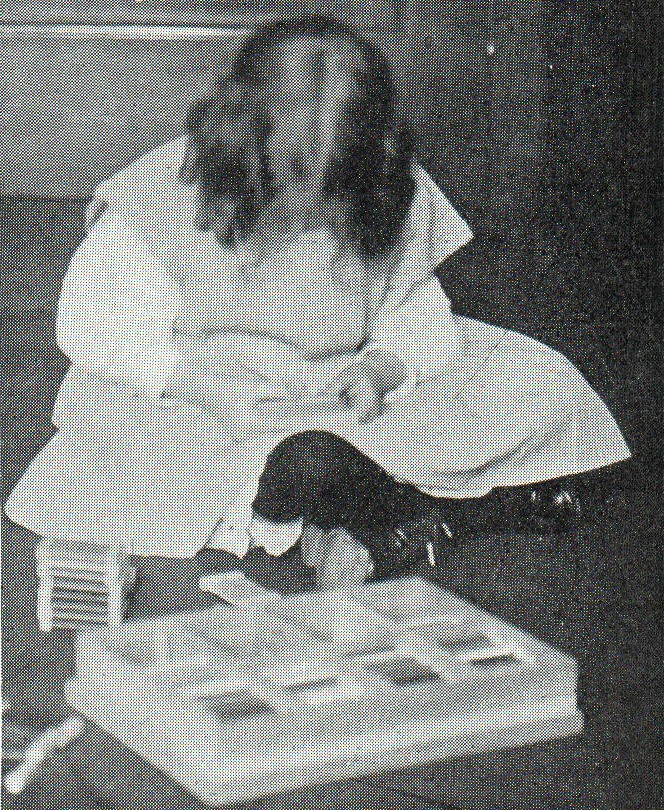
Dr. Montessori also observed that when toddlers are allowed to use their hands to work with materials while receiving a lesson, their learning went from passive to active. These tactile experiences allow children to learn on a deeper level and make discoveries on their own.
The Montessori classroom is filled with beautiful materials—from the golden beads that teach children decimal places to the clothes pinning activity that strengthens their pincer grip for when they begin writing.
“Play is the work of the child.” -Maria Montessori - Sensitive periods
Simone Davies defines a sensitive period as, “…a moment when the child is particularly attuned to learning a certain skill or concept and it happens with ease and without effort.” Children have sensitive periods for language, order, tiny detail, movement acquisition, sensorial exploration, and manners & courtesy. She goes on to explain that when children miss a sensitive period, they can still acquire that skill, it will just take a more conscious effort on their part. - Unconscious absorbent mind
When Dr. Montessori talked about the absorbent mind, she was referring to the effortless uptake of information with which children from birth to about the age of 6 are able to carry out. Davies says, “The ease with which a toddler learns gives us opportunities as well as responsibilities.” We must do our best to model kindness, respect, and love and to give children as many beautiful and positive experiences as possible. - Freedom and limits
Within the limits we set (our classroom rules), children have freedom of choice, movement and will. They must learn respect for others and responsibility for themselves in order to experience their freedom fully. When the realistic expectations we set for our children are not met or rules broken, freedoms are taken away. Children may be redirected, removed from a situation which could be harmful to them or others, or asked to stay with the teacher until they are able to make decisions within the limits that are set. - Independence and responsibility
Children want to do things for themselves and, when we allow them to, they feel so satisfied! This independence allows them to gain self-esteem as they fulfill the responsibilities that are placed upon them. Even toddlers are capable of learning to be responsible for themselves, for others, and for the environment. - Individual development
Each child is unique in their learning style, personality, needs, and developmental timeline. Montessori education celebrates each child’s special qualities and supports their individual development. - Respect
Montessori teachers show respect and kindness to children. They ask their opinion and give them options and opportunities. Montessori teachers are still in charge and enforce the limits but do so respectfully and with courtesy. - Observation
Observation is another essential part of the Montessori approach. When we observe without analyzing, reading into the situation, or making judgements, we are able to really see the child. We can more fully understand where they are in their development, what interests them, and eventually, to know them well enough to recognize when we need to provide assistance or to step back and allow them to do their work.

Montessori Outcomes
The efficacy of the Montessori method is hard to measure for many reasons. The main reason is that the Montessori method has different aims than traditional academic education. Traditional education’s emphasis is on language and mathematical literacy, whereas the Montessori method values the academic, social, physical, and psychological development of the child. Unlike math and language where clear numbers based on quantitative assessments can be extrapolated, success in social and psychological development is harder to quantify. However, based on the most recent research spanning the course of many different studies, the Montessori method has been found to be one of the most beneficial types of education currently available. A Montessori education that fosters the love of learning within each child, that values independence and autonomy, and that emphasizes social and practical skills, develops adults who fully realize their potential.

Recommended reading—Montessori: The Science Behind the Genius by Angeline Stoll Lillard
Our Mission
Little Blooms Montessori Preschool’s mission is to provide the environment, materials, and nurturing to allow the child to blossom, to develop a lifelong love of learning, a discovery of self, and a proclivity for peace and harmony.

Vision
Our vision is to continue Maria Montessori’s legacy of raising children who embrace respect, tolerance, and love in the hopes of making a tiny difference in creating a more peaceful world.

Our Team
Cecilia Hasleton – Director

Cecilia is the mother of three beautiful children. Her love of Montessori began during the pandemic as she was tasked with the impossible roles of simultaneously being a working-from-home mom and a homeschooling mom. After her baby was born, she left her job in Pediatric Cardiology research at the University of Utah and began courses to receive her Montessori teaching certificate in Early Childhood. Cecilia has also received a Bachelor of Science in Psychology from the University of Utah and a Masters degree in Public Health from the University of Edinburgh, Scotland. Her volunteer efforts include Family Nutrition Access (WIC) worker for the International Rescue Committee, a Special Events staff member for the Utah Aids Foundation, an EKG technician for the Eric Parades Save a Life Foundation, and, most recently, a soccer coach for her son’s Sandy City Parks and Rec team (despite knowing nothing about soccer.) Her favorite aspects of Montessori education are the emphasis on independence, empathy, peace, and the lifelong love of learning it fosters.
Cecilia loves stories in any form: books, movies, plays. She loves hearing about other people’s lives and experiences and having the chance to be in their shoes for a bit. She also enjoys travel and getting to know people and places all over the world. She loves spending time with her family and doing “kid stuff” like running in sprinklers, swinging, taking bubble baths and drinking chocolate milk. She hopes to one day be able to work for an international organization, such as UNICEF, and develop interventions to improve the health, safety, education, and well-being of children around the world.
Arlette Rovere Farnes – Lead Montessori Teacher

Arlette has always had a passion for early child education. She has been working with children for 6 years now, starting as a teacher in her hometown of Salinas, Ecuador. She moved to the United States in 2018 to further her education in the English language, going to school and working with children since arriving in Utah. After moving to the U.S., Arlette discovered the educational philosophy of Maria Montessori and she loves incorporating those principles in the classroom. Arlette received her Montessori teaching certification in Early Childhood in September of 2025.
The strongest attributes that Arlette has are kindness, patience, caring and understanding. She is able to use those abilities to help children grow and learn. She takes great pride in helping others, especially children, as she believes that an excellent early childhood education is the most important education one can receive. Arlette is a hard worker, reliable, and dedicated to the things about which she is passionate. She is delighted to have the opportunity to guide the children at Little Blooms Montessori Preschool.
Marlene Yañez Carbajal – Assistant Montessori Teacher

Marlene was born and raised in Monterrey, Mexico. She has a Bachelor’s degree in Education and has seven years of experience working with preschool and elementary students. Throughout her career, she has had the opportunity to work with children with different learning needs, which has helped her develop a strong sense of empathy and commitment to inclusion. She finds it truly fulfilling to see her students achieve their goals and gain independence when they are given the right support and tools for their growth.
She is happy to be using her teaching skills and extensive experience to guide the children of Little Blooms Montessori, where she says she learns something new from the children every day. She is passionate about observing how children explore, experiment, and learn at their own pace, developing their autonomy, concentration, and love for learning. The Montessori approach inspires her to keep growing as a teacher and to continue fostering an environment of respect, freedom, and responsibility in the classroom.
Barbara DeSoto – Substitute Teacher
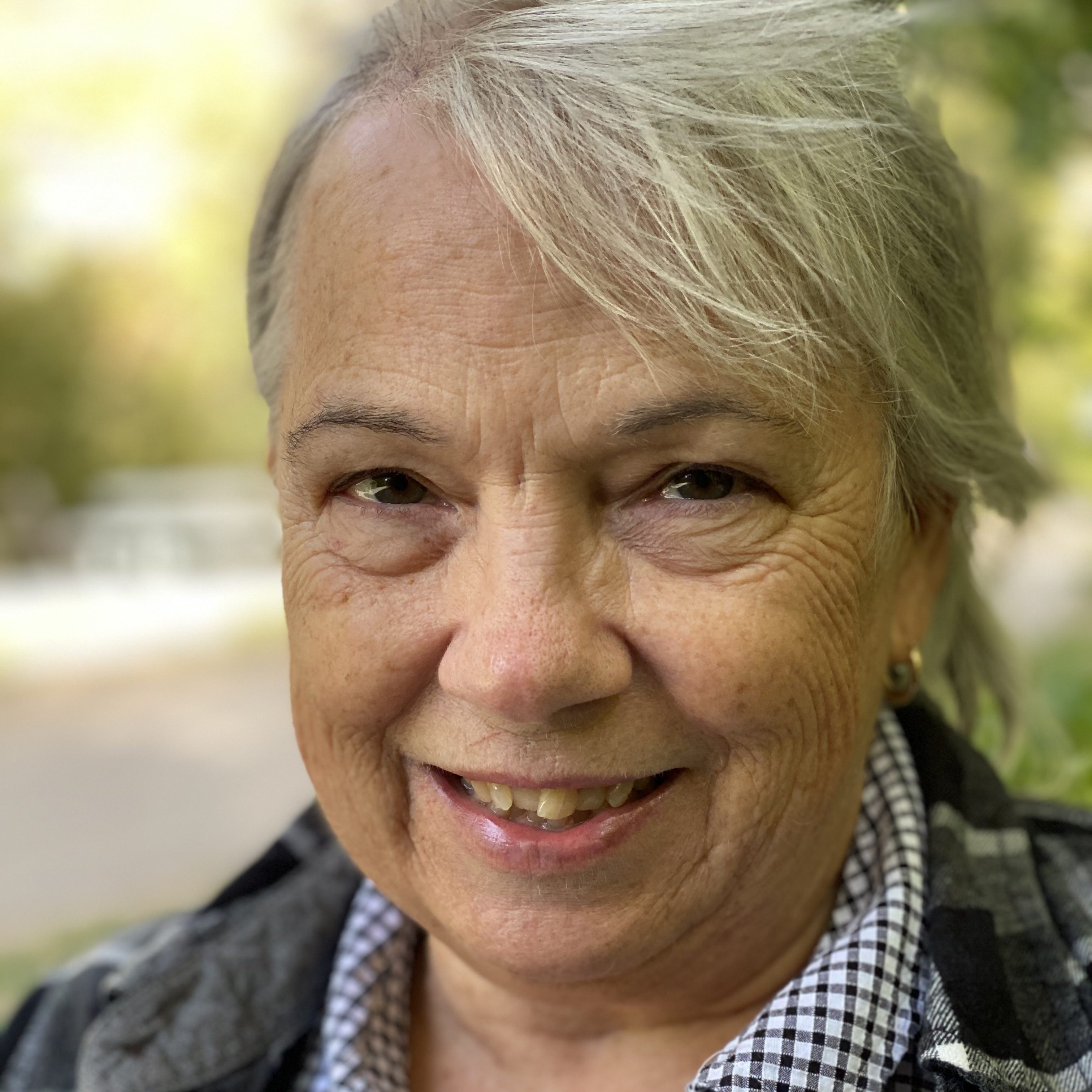
Barbara is the mother of four children and grandmother of five. She devoted 40 years of her life caring for others as a registered nurse and is now retired. She loves that Montessori education empowers children to think for themselves and that it provides autonomy and a sense of self unmatched by other forms of education.
Barbara has loved watching her children grow and develop into the amazing people they have become. She loves spending time with her grandchildren, reading, and everything about quilting—design, art, and composition. She also loves to travel and has had the opportunity to visit Mexico, Ireland, France, Spain, and the United Kingdom. She hopes to be able to see more of the world now that she is retired. She is looking forward to participating in our Montessori preschool to help guide in the development of the whole child in preparation for life’s rich experiences, a lifelong love of learning, and discovery of self.
Jason Hasleton – Technology Specialist, Maintenance


Call (801) 897-9393 to schedule a tour!


 Little Blooms Montessori Preschool