By Cecilia Hasleton, Little Blooms Montessori School Director
Choosing a preschool is one of the most meaningful decisions you’ll make for your young child. With so many options in Sandy and the greater Salt Lake valley, it can feel overwhelming — especially when you’re comparing two very different educational philosophies.
This isn’t about declaring one approach “better” than the other. Every child is different. But understanding what sets Montessori apart from a traditional preschool model can help you make a choice that truly fits your child’s personality and your family’s values.
How the School Day Is Structured
In a traditional preschool, the day follows a set schedule and a set lesson plan — reading, math, snack, science — all children receive the same lessons and information at the same time. The teacher presents information and the children take it in.
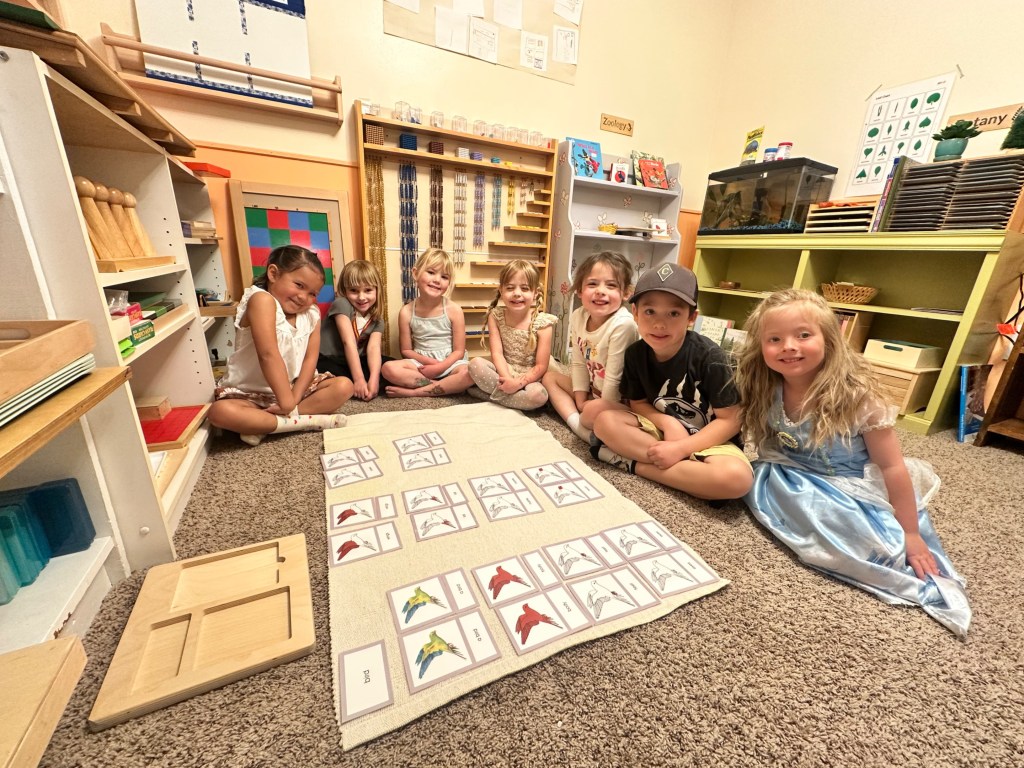
In a Montessori classroom, there is still structure to the day — circle time, presentation of new materials, morning work cycle, snack, outdoor playtime, nap — but the children have extended uninterrupted work periods where they choose their own activities from a prepared set of materials and have the opportunity to explore, question, and discover for themselves. Rather than a teacher simply providing information, Montessori educators follow the child’s interests and guide them to the materials that will inspire their curiosity — and the children move through the day with a level of independence that builds real confidence and a love of learning over time.
How Children Are Assessed
Traditional preschools often use structured assessments, gold stars, and external rewards to measure progress and motivate children. While this works for some kids, it can also create a reliance on external validation rather than internal drive.
Montessori teachers observe each child closely and document progress through detailed observation — not tests or grades. The goal is to nurture intrinsic motivation, so children learn because they are genuinely curious, not because they are chasing a reward.
How Children Interact With Each Other
Traditional preschools typically group children by age — all three-year-olds together, all four-year-olds together. Montessori classrooms intentionally mix ages, grouping children in three-year age spans in the same environment.
This mixed-age model creates a natural mentorship dynamic. Younger children are inspired and challenged by what older children can do. Older children reinforce their own understanding by helping younger peers — a dynamic that develops empathy, leadership, and communication skills that same-age classrooms rarely replicate.
Which Approach Is Right for Your Child?
Montessori tends to be a particularly strong fit for children who are naturally curious and self-directed, thrive with freedom and open-ended exploration, do well with hands-on tactile learning, or benefit from a calm, low-stimulation environment.
Traditional preschool may be a better fit for children who respond well to clear external structure, enjoy group instruction and class-wide activities, or need a highly predictable, scheduled environment to feel secure.
When in doubt, the best thing you can do is visit both types of classrooms and trust what you observe. Children often tell you which environment feels right — through their body language, engagement level, and excitement (or reluctance) to walk through the door.
Come See the Little Blooms Difference
At Little Blooms Montessori in Sandy, Utah, we believe every child deserves an environment where they are known, valued, and given the freedom to grow at their own pace. Our certified Montessori program — paired with a Spanish Dual Language Immersion curriculum — offers something truly unique in the local preschool landscape.
We welcome families to come tour our classroom, meet our teachers, and experience firsthand what Montessori looks like in action.
Enrollment for the 2026–2027 school year is now open. Call or text us at (801) 897-9393 or visit our Enroll page to schedule your visit.
 Little Blooms Montessori Preschool
Leave a comment